Research - 19.02.2026 - 09:30
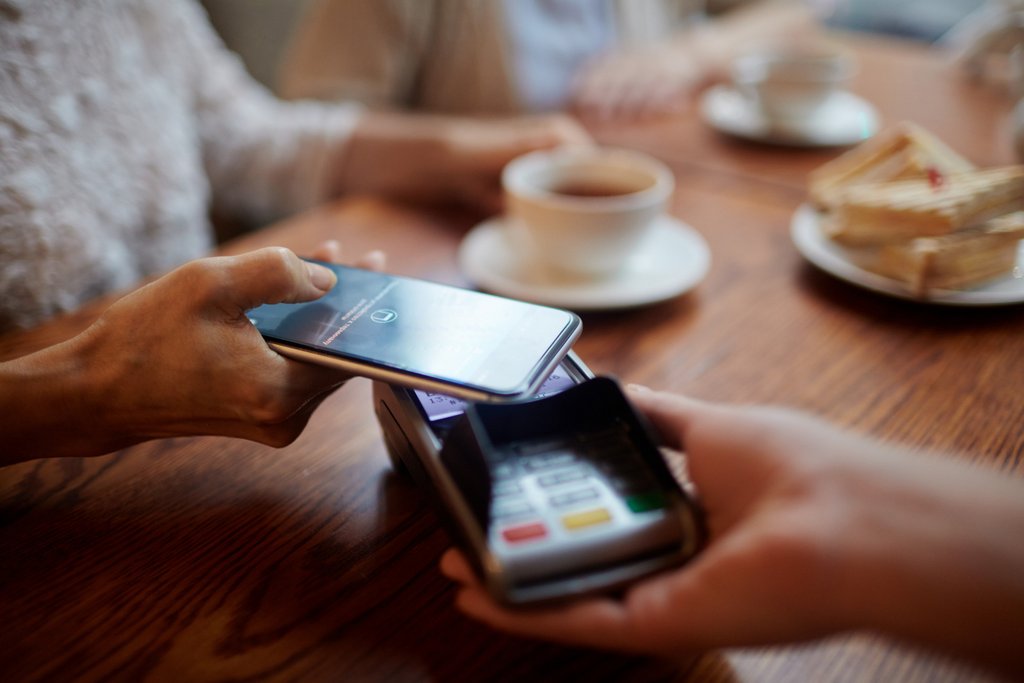
In Switzerland, mobile devices such as cell phones, tablets, and smartwatches are the most commonly used methods of payment. In terms of the total number of all transactions, this is a comparison with percentages recorded six months ago:
These findings are based on an electronic payment diary completed by 1173 people as part of the 14th Swiss Payment Monitor, conducted by the Center for Financial Services Innovation at the University of St.Gallen and the ZHAW School of Management and Law, from the end of October to mid-November 2025.
Taking only in-store payments into consideration, the debit card is again just ahead of cash and payments with mobile devices (including Twint, mobile wallets, and in-app payments) in terms of the number of transactions:
Compared to the May 2025 survey, there has been significant growth in non-mobile credit card use at the expense of other payment methods. "Our analyses show this is partly due to the one-off information and questions about credit card protection mechanisms in the previous online survey," says Tobias Trütsch, payment economist at the University of St.Gallen. "In the online survey, around 41 % of respondents stated that they would use a credit card more frequently if they were aware of the protection mechanisms."
When billing products for on-site payments are analyzed individually (debit/credit cards stored in mobile wallets are counted as one-site payments), the outcome is as follows: After debit cards with 33.6 % (+0.3 percentage points) and cash with 26.5 % (-1.6 percentage points), credit cards are in third place with 25.3 % (+2.9 percentage points). Mobile payments with Twint, which are debited directly to the bank account, are in fourth place with 10.6 % (-0.7 percentage points).
The choice of payment method confirms that, when trust is lacking, security beats convenience – especially in online retail. In a fictitious situation involving the payment of 1000 euros to an unknown foreign retailer, respondents most frequently chose to pay on account (48.5 %) or by credit card (31.8 %). The main reason cited for these payment methods was that they were considered the safest in this situation. "With purchase on account, you only pay after receiving the goods and only when your monthly invoice is settled. The amount can be reclaimed in the event of a problem," explains ZHAW payment expert Marcel Stadelmann. "These two means of payment are often chosen owing to the increased perception of security."
Less than half of those surveyed were aware that credit card payments can be disputed in the event of a problem (known as "chargeback"). However, card freezing and authentication methods were better known. Three-quarters of respondents were familiar with transaction-based risk monitoring for credit cards, compared to around half for debit cards and one-third for mobile payments.
The Swiss Payment Monitor is published every six months to provide an up-to-date picture of developments in the payment behavior of residents of Switzerland. It was published for the first time in 2018 and is based on representative survey data from online and diary surveys, as well as on public data from the Swiss National Bank. Between the end of October and mid-November 2025, around 1,670 people aged 18 or over from the three main language regions of the country were surveyed on a representative basis regarding their payment habits and attitudes toward payment methods. 1,173 people then recorded all their non-recurring payments over four days. The Swiss Payment Monitor is published by the Center for Financial Services Innovation at the University of St.Gallen and the Swiss Payment Research Center at the ZHAW School of Management and Law. The study is financed by the two research institutions, the Swiss Payment Association (an industry organization representing all major Swiss issuers of credit cards on behalf of international card organizations), and industry partners Nexi and Worldline.
Image: Adobe Stock / pressmaster